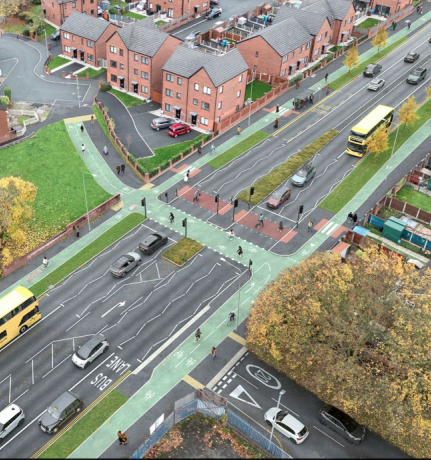
Manchester City Council recently launched a consultation to gather views on proposals to transform Oldham Road for people using the Bee Network, whether taking the bus, walking, wheeling or cycling. You can have your say via the council website – it’ll take a few minutes.
Now is our chance to bake in huge health benefits for the North Manchester area. The Marmot Report 2022-27 stated that currently both women (6 years) and men (8 years) have large gaps in life expectancy between the most and least disadvantaged areas of the borough. Studies have shown that devolution of health and social care presents opportunity for improving life expectancy and healthy life expectancy.
“The disproportionate benefits for the unhealthiest neighbourhoods support arguments for targeted interventions to reduce inequalities” (N. P. Sweeney, January 2026)
And a large part of achieving that is enabling healthier lives. The A62 Oldham Road scheme will make a huge contribution to bringing North Manchester’s life expectancy rate in line with parts of the wider borough already enjoying Transport for Greater Manchester’s Streets for All treatments.
But imagine waking up in a few months to hear that all this improvement won’t go ahead, because negative responses from people wedded to their car or fearing change in general outnumber responses in favour of safer, healthier communities.
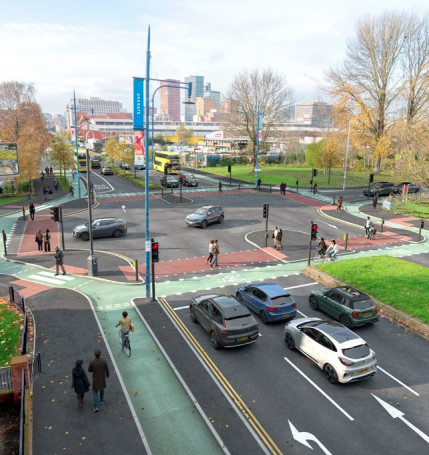
We all know that Oldham Road currently offers next to nothing as incentive to move by walking and cycling, and these changes will be a vast improvement. So say yes to this scheme to avoid a return to nose-to-tail traffic, air pollution, and slower buses.
There so many great reasons to back this improvement:
Health inequalities and place context
Oldham Road runs through several North Manchester neighbourhoods including Collyhurst, Miles Platting, Newton Heath and Failsworth, which are all areas experiencing higher levels of deprivation. The existing transport conditions on the corridor – including severance caused by the A62, road danger, poor walking and cycling environments, and unreliable bus journeys – are huge barriers that limit everyday movement and access to services, and which disproportionately affect communities along the route.
The corridor currently features low levels of walking and cycling, exposure to traffic risk, high reliance on motor traffic, air quality challenges, and limited car access for many households. And so the scheme objectives address these points and are aligned with improving daily activity levels, reducing road danger and creating safer, more attractive environments for walking, wheeling and cycling.
Car availability, transport poverty and access
Census‑based mapping of car or van availability shows that many households along the corridor have limited access to a private car and are therefore more reliant on walking, cycling and bus. This evidence demonstrates why improvements to bus reliability, safe crossings and active travel routes are particularly important for equity and inclusion on this corridor.
Reporting by the project consultant confirms that in the morning peak inbound (07.30–09.30), buses account for 41% of people travelling in vehicles on Oldham Road, underlining the corridor’s role in providing access to jobs, education and services for communities who are less likely to have access to a private car.
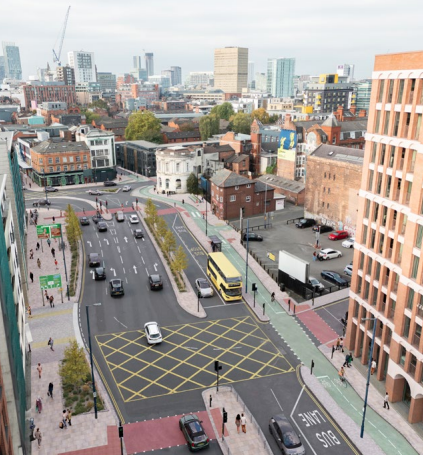
Schools, young people and education access
The corridor serves numerous nurseries, primary schools, secondary schools and further/higher education sites across North Manchester. The scheme is explicitly designed to support these trips by:
- reducing severance caused by Oldham Road,
- improving the safety and quality of pedestrian crossings,
- enabling safer walking, wheeling and cycling journeys, and
- improving bus reliability for longer journeys into the city centre.
This is particularly relevant for children and young people, where independent travel is currently constrained by traffic volumes, crossing difficulty and road safety concerns. Improving conditions along Oldham Road is therefore expected to support safer school journeys and greater independence for younger residents.
Safety and wellbeing
Road safety is a key requirement for improving people’s health. The existing evidence base highlights a history of collisions resulting in serious injuries on the corridor over recent years, reinforcing the case for safer street design, protected crossings and lower‑stress environments for walking, wheeling and cycling as part of a Vision Zero approach.
Bus use and access to opportunity
More broadly, Oldham Road is a major bus corridor, supporting nine services and over 1,000 bus journeys into the city centre each weekday morning, accounting for around 29% of trips on the corridor. Average bus speeds are currently around 9 mph in the morning peak, with around 31% of buses running more than 5 minutes late, which has a disproportionate impact on people who rely on bus for access to work, education and services. Improving reliability and journey quality is therefore central to both inclusion and health outcomes.
Take 5 minutes to help make this happen
So here’s your opportunity to avoid a return to the status quo and secure a better future for North Manchester by having your say before the closing date on 29 March. Find out more via the Manchester City Council website.